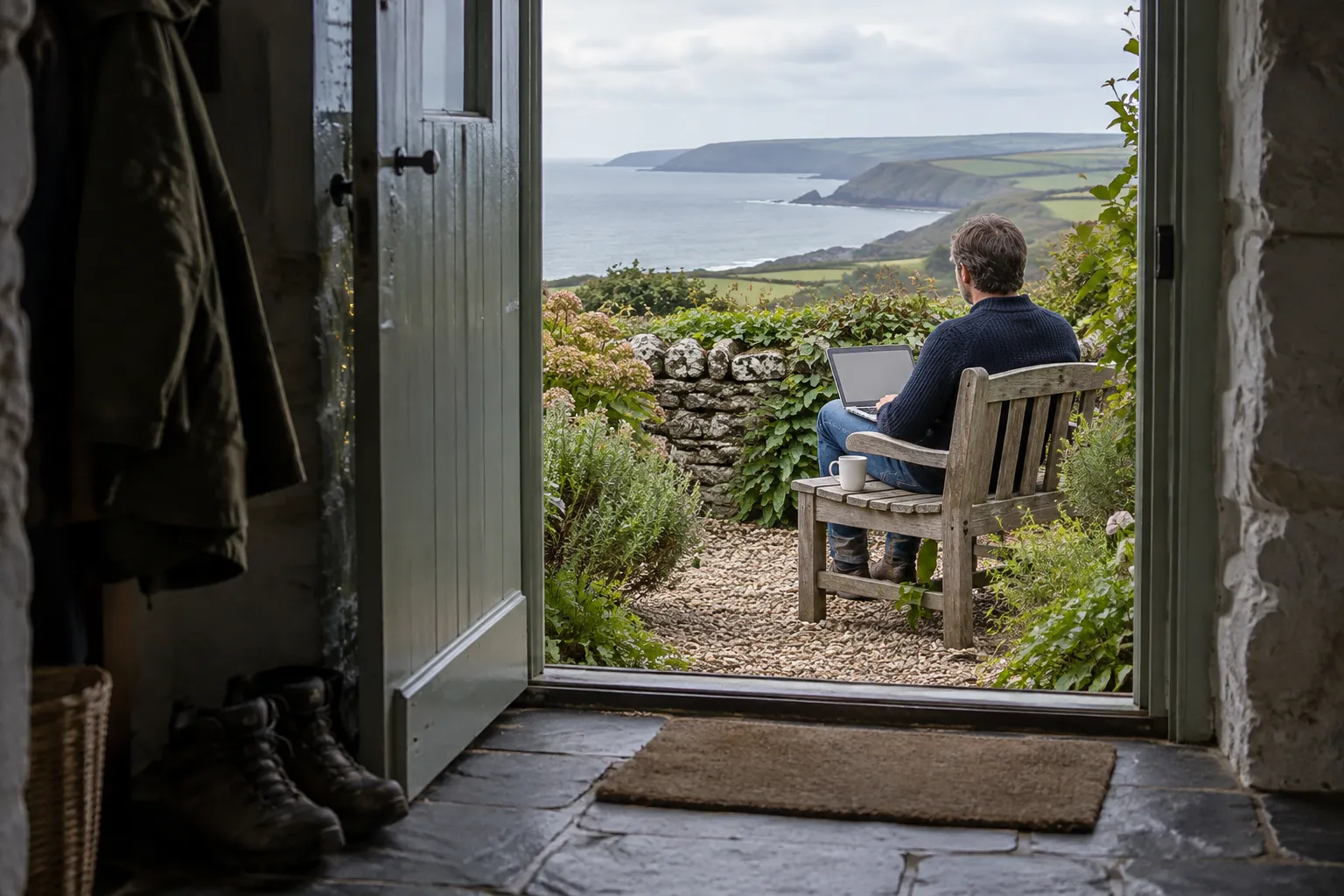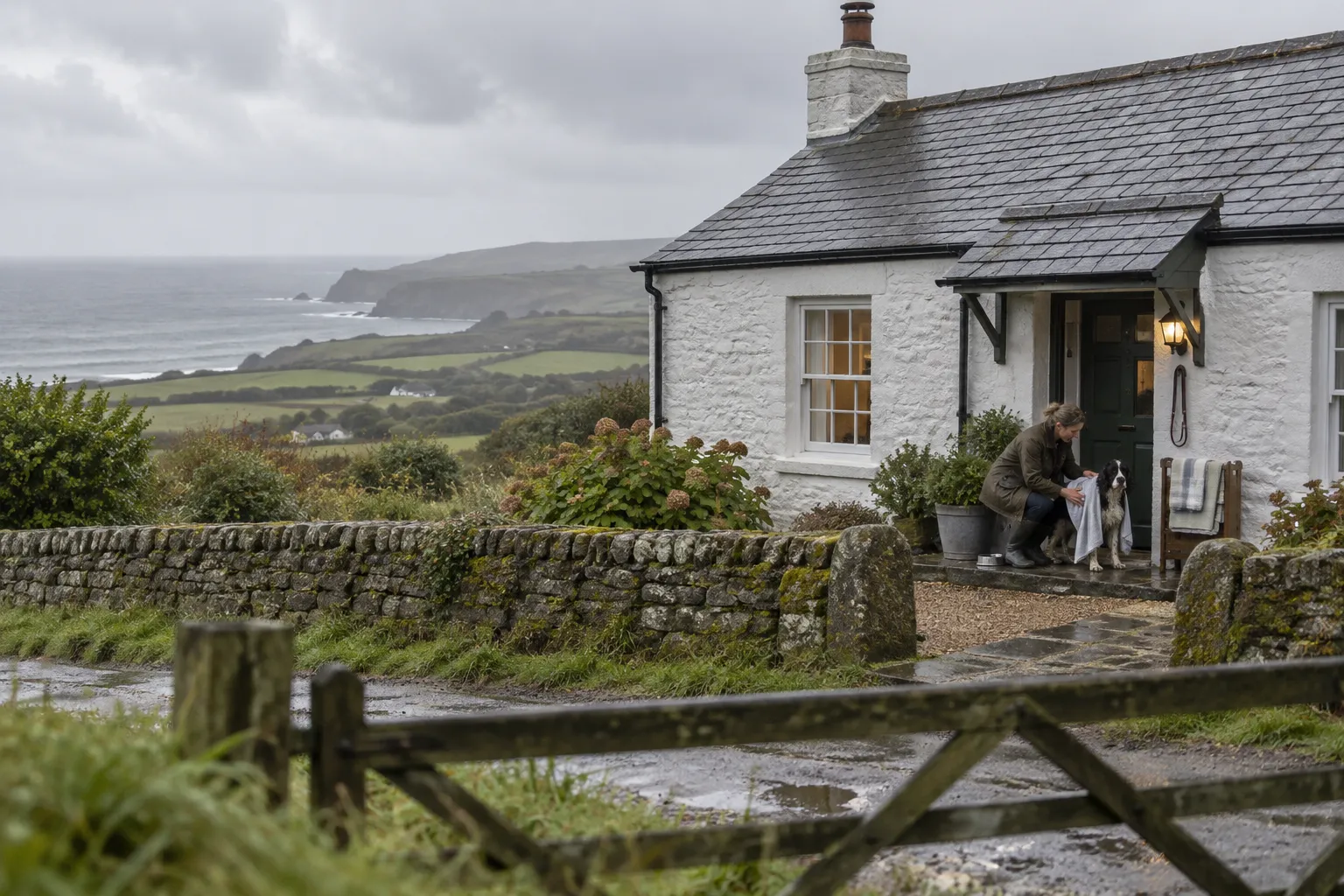
Allowing dogs in a holiday let is usually worth it for a property with a garden or a walk from the door, because it opens the listing to every guest who travels with one. On Airbnb you can charge a pet fee of up to your nightly base rate to cover the extra clean. Assistance dogs sit outside that choice entirely: they stay, free of any pet fee, whatever your pet policy says.
That last point overrides any pet policy you set, so it comes first, before the commercial case.
Assistance dogs are not pets, in law or on Airbnb
An assistance dog can stay at your holiday let even if you allow no pets, and you cannot charge for it. Two separate rulebooks say so.
UK equality law. In England, Wales and Scotland, the Equality Act 2010 treats a holiday let as a service. Its premises rules in Part 4 do not apply to accommodation that “is generally for the purpose of short stays by individuals who live elsewhere” (section 32(3)), which leaves short-stay accommodation under the services rules in Part 3. Section 29 says a service provider must not discriminate “by not providing the person with the service”, or “as to the terms” on which it is provided. Section 20 adds a duty to make reasonable adjustments, owed to disabled people generally rather than one guest at a time (Schedule 2, paragraph 2), and section 20(7) bars you from making the disabled person pay “to any extent” the cost of complying. A blanket “no dogs” rule is a practice that puts an assistance dog user at a disadvantage, so it has to bend for them, and the pet fee cannot follow.
Airbnb’s Accessibility Policy. For home listings, a host must not refuse a reservation because of a service animal unless Airbnb has granted the listing an exemption, must not “charge the guest additional fees related to the reservation, such as pet fees or cleaning fees for animal hair or dander”, and must not treat the guest differently, for example with different house rules. Guests “do not need to disclose the presence of a Service Animal before booking” and are not required to provide documentation.
You may ask two questions, and only two: “Do you require your animal because of a disability?” and “What work or task has the animal been trained to perform?” You may not ask about the disability itself or ask for a demonstration.
Airbnb Accessibility Policy and pet fee rules, Equality Act 2010
Same dog, two rulebooks
What a host may do about a guest's dog, depending on whether it is a pet or an assistance dog, on a home listing in Great Britain.
Pet
Assistance dog
Turn the booking down under a no-pets rule
Charge a pet fee
Charge extra cleaning for hair
Set house rules for the dog
Claim for damage the dog causes
AllowedNot allowed
Emotional support animals are treated differently. Airbnb’s policy only requires hosts to accept them in a few places outside the UK (California, New York, Quebec and Ontario), and elsewhere a host who does not accept pets may decline the booking. The Equality Act 2010 does not mention emotional support animals, so a request to bring one is weighed as a reasonable adjustment, on the facts of the guest’s disability.
If a guest’s assistance dog damages the property, the cost is recoverable in the usual way. Airbnb says that if a service animal causes damage, the host can still request payment through the Resolution Centre, and the guest damage guide sets out the deadlines.
How Airbnb’s pet fee works
Airbnb’s pet fee is a separate charge that you set, and it comes with three rules.
- It covers cleaning, nothing else. “Pet fees should only be used to cover the cost of the expected cleaning you’d do after hosting furry guests.” Damage goes through AirCover and the Resolution Centre instead.
- It has a cap. In Airbnb’s words, “your pet fee can’t be more than your nightly base rate.”
- It comes in four shapes. A flat fee per booking, per night, per pet, or per pet per night.
Guests tell you up front how many pets are coming, from none to five. And there is one trap in the settings: adding a pet fee to a listing marked “No pets allowed” switches it to “Pets allowed”. Decide the policy first, then the fee.
Airbnb Help Centre, pet fees for home listings
One stay, four ways to charge
How many times the fee is charged on the same booking: three nights, two dogs. Each teal square is one charge of the fee; each row has room for six.
Per booking: once
Simplest. Suits the single deep clean that follows any stay with a dog.
Per night: three times
Grows with the stay, as hair and mud do.
Per pet: twice
Prices the second dog without penalising a long stay.
Per pet per night: six times
Adds up fastest, and is the one to check against the cap.
Which shape to choose comes down to what a dog actually costs you. If the extra work is one longer clean at checkout, a fee per booking matches it. If a week of a wet spaniel means more than a weekend, a nightly fee does. Price it from your cleaner’s real extra time, the same way the cleaning fee is priced, and the number holds up when a guest compares it with the next listing.
What allowing dogs in a holiday let takes
A dog-friendly listing earns its bookings in the details, and most of them are set up once.
- A garden that holds a dog. “Fully fenced” means no gaps under the gate. If the garden is not secure, say so in the listing; a guest who knows will plan around it.
- Floors and fabrics that clean. Hard floors downstairs, washable throws on the sofa, and a rule about beds and bedrooms that your guests read before they arrive.
- A place to wash off. An outside tap, a boot room or a porch, and a stack of old towels by the door, so the beach stays out of the house.
- Your house rules. How many dogs, how big, whether they can be left alone, and where they are not allowed. For pets, these are yours to set.
- Your cleaner’s time. Hair works into upholstery and carpets, and the next guest may have an allergy. Agree the extra time and rate before the first dog arrives.
- Your insurance. Tell your insurer that you accept pets, and read the policy for how it treats animal damage. The insurance guide covers what a short-let policy needs in the first place.
Then put it in the listing. The guide to writing a listing description explains how Airbnb uses amenities and characteristics in search; “dogs welcome” is a deciding fact that belongs near the front of the title, and the garden fence, the number of dogs and the rules belong in the description.
Know the local dog rules too. In England and Wales, councils can restrict dogs on beaches and in parks with public spaces protection orders under section 59 of the Anti-social Behaviour, Crime and Policing Act 2014. Check your council’s website for any order covering the beaches and parks near you, and the months it applies, and put the answer in your house guide. A guest with a dog books for the walks.
When dogs are the wrong call
Dogs suit cottages and coastal and rural lets with outside space. Three situations argue for a no-pets policy.
- A flat with shared entrances or a lease that says no. A lease can restrict animals, and neighbours share the stairwell. Read the lease before anything else; the leasehold guide explains how to check what it allows.
- Pale carpets and delicate furnishings you cannot change. If the property cannot be made easy to clean, the cleaning time and the damage risk will outrun any pet fee you can charge under the cap.
- No outside space at all. Every walk starts at the front door and every wet dog comes straight inside, so the cleaning carries the whole cost.
Whichever way you decide, the assistance dog rules above still apply, so a no-pets listing should still be ready to welcome one.
Turning a dog-friendly property into bookings
Accepting dogs is a decision about who you market the property to. It changes the title, the photos, the description, the fee structure and the cleaning plan, and it works best when all five say the same thing. That is a decision we settle at the start, because it shapes how a property gets booked. If you want to know what your property could earn as a short let, with or without dogs, our free valuation looks at the property and its market together.
Frequently asked questions
Can I refuse an assistance dog if I have a no-pets policy?
No. On Airbnb you may only turn down a service animal if Airbnb has granted your listing an exemption, and the Equality Act 2010 requires service providers in Great Britain to make reasonable adjustments for disabled guests, which a blanket no-dogs rule has to give way to.
How much can I charge as a pet fee on Airbnb?
Up to your nightly base rate. Airbnb’s rule is that “your pet fee can’t be more than your nightly base rate”, and the fee is meant to cover the expected extra cleaning. You can set it per booking, per night, per pet or per pet per night.
Can I take a dog damage deposit?
Airbnb’s pet fee covers cleaning only. For damage, Airbnb points hosts to AirCover and the Resolution Centre, which the guest damage guide explains step by step.
Should I tell guests if my own dog lives at the property?
Yes, if you or another animal lives there, say so plainly in the listing. Guests with allergies or fear of dogs need to know before they book, and leaving it out risks an accuracy complaint and a poor review.
Sources
- legislation.gov.uk: Equality Act 2010, section 20 (duty to make reasonable adjustments; s.20(7), no charging the disabled person for complying), section 29 (service providers must not discriminate by not providing the service or as to its terms), section 32 (Part 4 premises rules do not apply to accommodation generally for short stays by people who live elsewhere) and Schedule 2, paragraph 2 (the duty is owed to disabled persons generally); all read 2026-10-23
- Airbnb Help Centre: Accessibility Policy (service animals: no refusal without an exemption, no pet or hair-cleaning fees, no different house rules, no disclosure or documentation required, the two permitted questions; emotional support animals; read 2026-10-23)
- Airbnb Help Centre: Add a pet fee for home listings (four fee structures; cap at the nightly base rate; cleaning only; service animals stay free and damage still claimable; 0 to 5 pets; adding a fee switches the listing to pets allowed; read 2026-10-23)
- legislation.gov.uk: Anti-social Behaviour, Crime and Policing Act 2014, section 59 (local authority power to make public spaces protection orders; England and Wales; read 2026-10-23)