An Airbnb changeover checklist covers four jobs, in this order: reset the property to its photographs, run the fire safety checks, photograph every room, and write down what you found. In a holiday let in England with nobody living on site, the government’s fire guidance moves its weekly and monthly checks to every change of guest, so the clean is half the list.
The other half is what protects the booking after this one, the review and the payout.
What a changeover has to achieve
A changeover has one job: hand the next guest the property they booked, in the condition the listing shows, safe to sleep in. Everything on the checklist serves one of those three.
The money reason is in Airbnb’s rules. Its Rebooking and Refund Policy, effective 6 February 2025, lists a place that is “not reasonably clean and sanitary” at check-in as a Reservation Issue. Guests have 72 hours from discovering it to report it, and when Airbnb refunds them, the host’s payout is reduced by the amount refunded, or not paid at all. Airbnb’s guest guidance on unclean arrivals tells guests to message the host first, take photos and ask for a fix, a cleaning fee refund or, in severe cases, a cancellation with the remaining nights refunded.
So a missed bathroom costs more than a star. It can cost the stay.
The review comes next. Airbnb’s own cleaning advice for hosts says a lack of cleanliness is one of the most common reasons guests give fewer than five stars, and cleanliness is one of the category ratings guests score separately. A listing that wins the click on its photos and loses it in the reviews is paying for marketing it cannot keep. That is why the changeover belongs in any serious plan to get a property booked: it is the part of the operation every future guest reads about.
The changeover checklist, in the order it runs
The order is what saves the time. Stripping the beds first lets the laundry run while you clean. Cleaning top to bottom means dust falls onto floors you have not done yet. Restocking after cleaning keeps fresh supplies off wet surfaces. The safety checks come once the rooms are clear, and the photographs come last, because they are the record of the finished property.
One changeover, two tracks
The laundry runs while the house is cleaned
The main line is the property. The right-hand track is the linen, which leaves at step two and comes back as the spare set for the next changeover.
Walk round as foundPhotograph damage, note lost property and what ran out
Strip beds, bag towelsCheck mattresses and seams as you go
Into the wash
KitchenFridge, oven, hob, dishwasher, bins out
Washing
Bathrooms, top to bottomHair, limescale, extractor, under the bath edge
Drying
Make beds from the spare setNever wait on the dryer
Folded, checked for marks
Dust, then floors lastUnder beds, inside drawers, outside the door
Into the cupboard as the next spare
RestockAgainst a written par list
Fire safety checks, loggedAlarms, fire doors, exits, appliances
Final photographs, lock upSame angles every time, new door code
1. Walk round before you touch anything
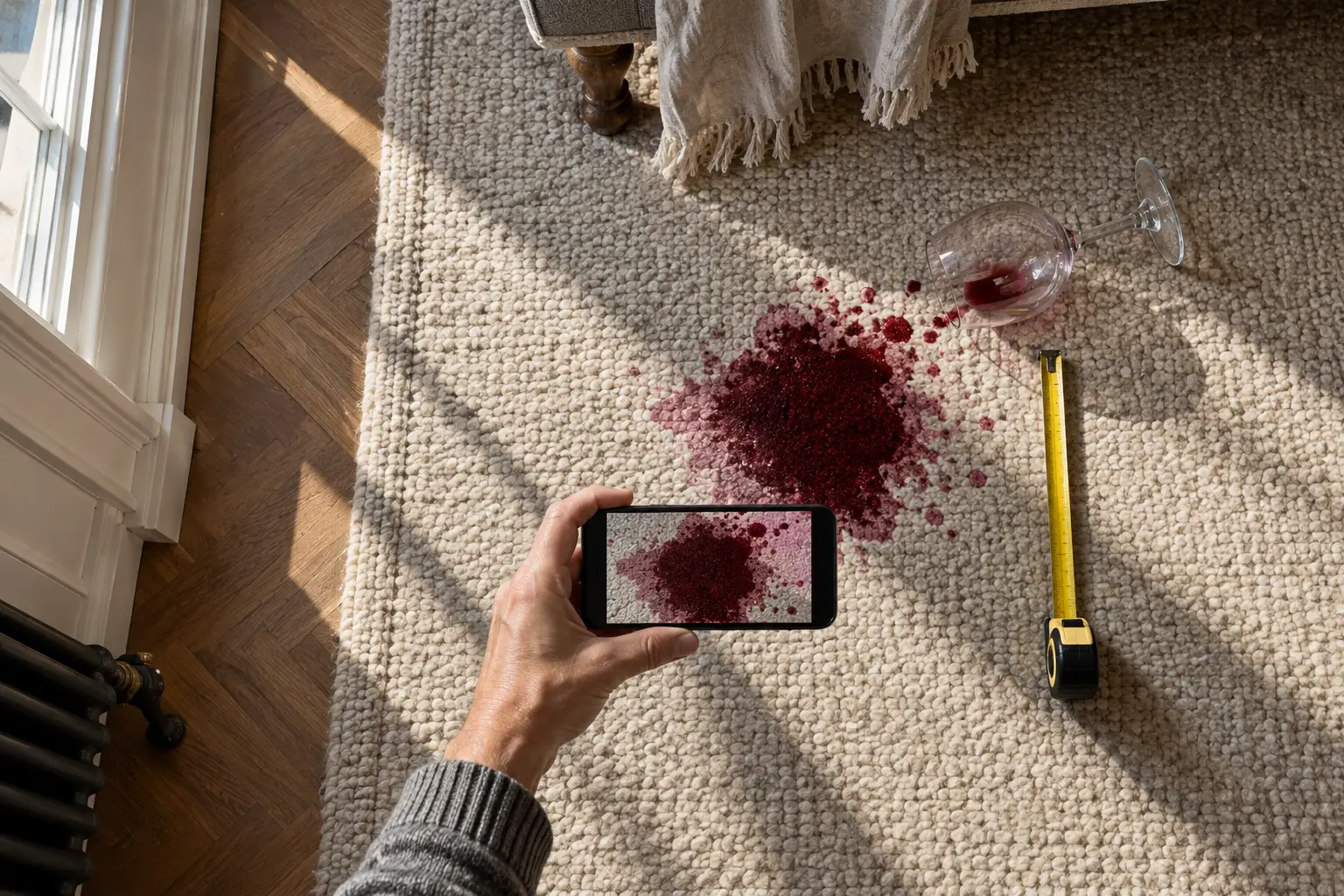
Go through every room as the guest left it, with your phone out. Photograph anything damaged, stained or missing before it is moved or cleaned, note anything left behind, and note what ran out. This is the five minutes that decides a damage claim: Airbnb asks the guest to pay through the Resolution Centre within 14 days of checkout, and the case rests on dated photographs.
2. Strip the beds and start the laundry
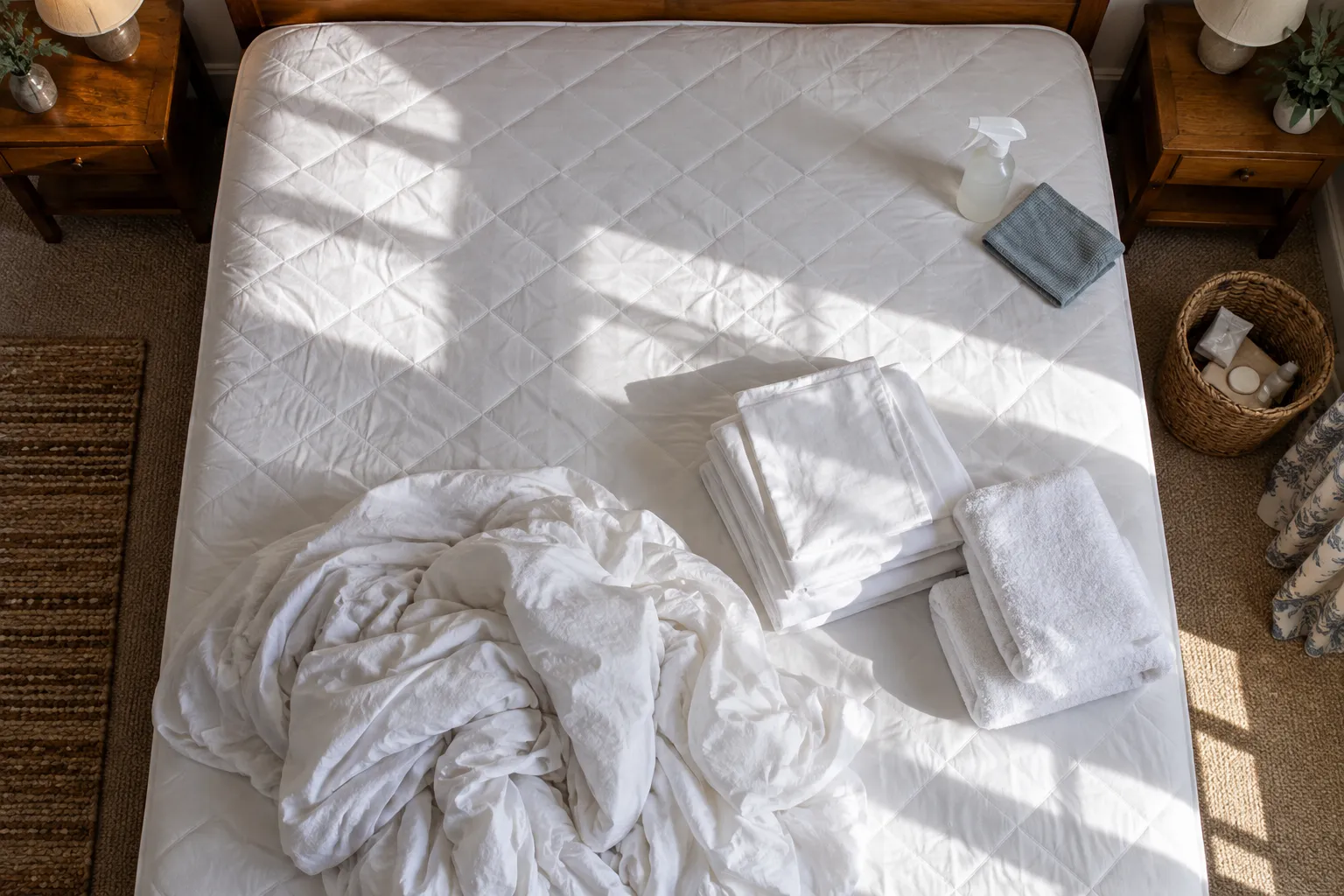
Strip every bed, including the ones that look unused, and bag the towels. As each mattress is uncovered, look at the seams, the mattress protector and the headboard. The NHS lists the signs of bedbugs as spots of blood on bedding and small brown spots on bedding or furniture, and names bed frames and mattresses among their hiding places. Finding them at a changeover means the next guest never does. If you see them, stop letting that room and call the council or a pest control service, which is the NHS’s own advice.
3. Kitchen
Inside the fridge, the oven, the microwave and the dishwasher filter, then every surface, the hob and the sink. Wipe the cupboard fronts and edges, empty the bins and take the bags out of the property (more on the bins below). Check every plate, glass and pan you put away: a washed glass with a lip mark on it is the detail a guest photographs.
4. Bathrooms, top to bottom
Extractor fan, mirrors, shower screen, taps, bath, toilet, then the floor. Hair is the bathroom find guests photograph, so check the plughole, the shower tray edge and behind the toilet. In hard water areas, limescale on the screen and taps comes back between stays and needs attacking every time.
5. Make the beds from the spare set
The beds are made from clean linen taken out of the cupboard, never from the load that has just gone in. That is the whole reason a property needs more than two sets (see the linen section below).
6. Dust, then floors last
Shelves, skirting, lamps, window sills, the tops of wardrobes. Airbnb’s own cleaning advice adds the places guests check and hosts forget: under the beds, inside every drawer, and the entrance and patio outside. Vacuum and mop last, working back towards the door.
7. Restock against a list
Loo roll, bin bags, washing-up liquid, dishwasher tablets, hand soap, shower gel, tea, coffee and whatever else the listing promises. Write a par list for the property, the quantity of each item that should be there when a guest walks in, and restock to it. Without a list, “we’ll top it up” becomes the guest discovering the last two sheets of loo roll at 11pm.
8. Run the fire safety checks and log them
This step gets a section of its own below, because it is the one a cleaning-only list leaves out.
9. Final photographs, then lock up
Photograph every room from the same spot every time, with the date stored in the file. Then lock up, change the door code if you use one (Airbnb’s safety rules say hosts should change entry codes between each reservation, and the self check-in guide covers when to send the new one), and message whoever is next in the chain that the property is ready.
The fire checks that belong in every changeover
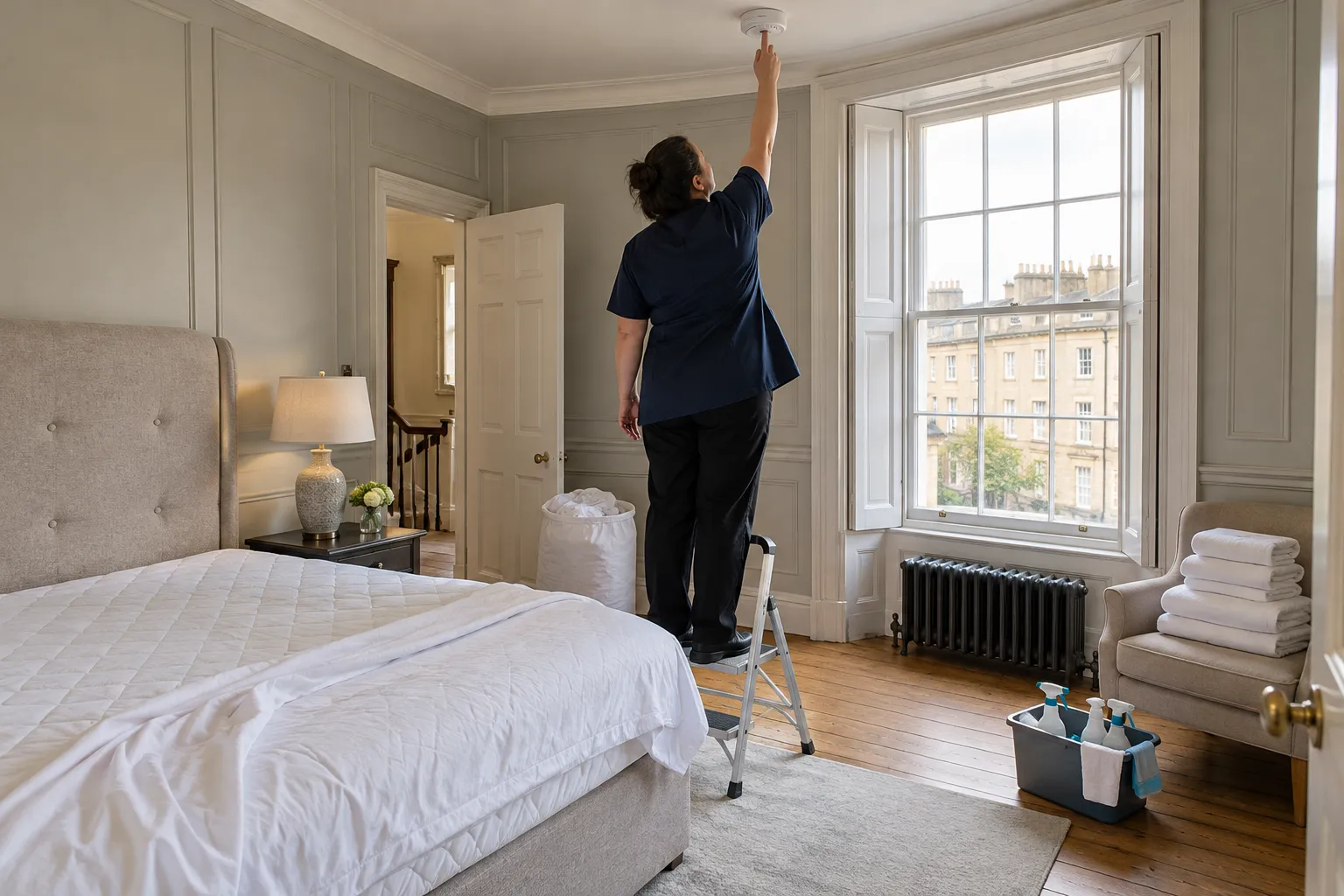
In a holiday let in England with nobody living on site, the fire checks happen at every changeover. GOV.UK’s guide for England, Making your small paying guest accommodation safe from fire, sets out daily, weekly, monthly, six-monthly and annual checks for owners who live in or staff the property. Then it adds one line for self-catering premises where staff or owners are not present: on each change of occupancy, “the above weekly and monthly tests should be carried out”.
Four weeks of fire checks, drawn to scale
Without an owner on site, every changeover is a test day
The same two checks under the government guide: fire-resisting doors closing under their self-closers (a weekly check), and smoke and heat alarms tested (a monthly check). Each mark is one check on a 28-day line.
Owner or staff on the premises
Checks on the guide's weekly and monthly cycle
Self-catering let, nobody on site
Both checks at each change of guest. Illustrative calendar: stays of three and four nights, changeovers on days 1, 4, 8, 11, 15, 18, 22 and 25
5 checks
in four weeks with someone on site
16 checks
in the same four weeks at the illustrative self-catering let
The weekly and monthly checks the guide lists, which become changeover jobs in a self-catering let:
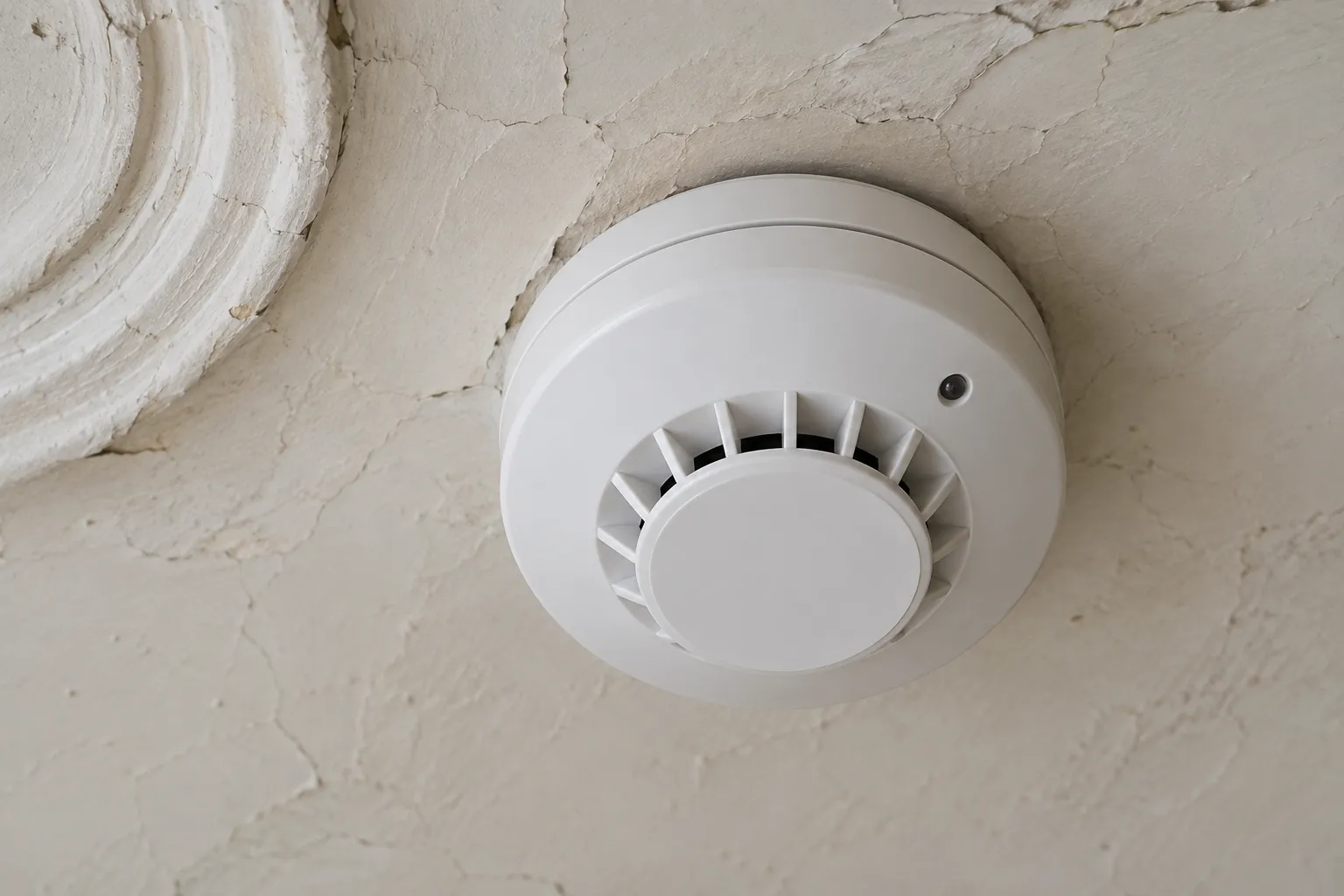
- Smoke and heat alarms tested, to check they work and are loud enough to wake anyone who is sleeping. Airbnb’s safety requirements say the same in its own words: detectors need to be in working order and hosts should test them regularly.
- Fire-resisting doors on stairways and escape routes close properly under their self-closers. A wedge left under a door is the thing to look for.
- Exit doors not in regular use open easily. The guide also says exit doors must open from the inside without a key.
- Torches or emergency lighting given a functional test, where the property has them.
- A fire alarm system, if the property has one rather than domestic alarms, tested the way the guide sets out for its type.
Two more come from elsewhere in the same guide. Escape routes, halls and stairs must be kept clear of combustible materials and storage, which at a changeover means suitcases, bikes and boxes the last guests left in the hall. And the guide asks for a visual check that all appliances appear to be in good condition between lets: kettle and toaster leads, the iron, lamps and anything with a plug.
Then write it down. The guide asks for a suitable record of testing and maintenance in a log book. A line per changeover with the date, who checked and what they found is the record that shows the checks happen, and it is the first thing anyone will ask for if something goes wrong. The fire risk assessment is the document that sets out your property’s fire precautions; the changeover log is the evidence you keep them.
Airbnb’s safety rules add a short list of known hazards hosts must address before accepting reservations, and three of them are changeover finds: blocked exits, smoke detectors that do not work, and pests. A property with a hot tub adds a full drain and refill between every group of guests, which the hot tub guide sets out.
How many sets of linen an Airbnb needs
Three sets per bed is the working minimum: one on the bed, one in the wash, one clean in the cupboard. That is the figure our furnishing checklist uses, and the logic is simple. A changeover makes the beds from the cupboard set while the used set goes into the wash, so the cupboard set has to exist before the wash finishes. Two sets work only if the laundry is always dry, folded and back before the next changeover starts, and the first same-day turnaround or delayed delivery breaks that.
Check your own number with one question: how long does a set take to come back from the moment it is stripped? If that is longer than your shortest gap between guests, add a fourth set. Towels follow the same rule, with an extra set of hand towels and bath mats, because those go first.
When a set comes out of the wash, check it before it goes into the cupboard: marks, holes, make-up stains and lost elasticity on fitted sheets. A stained pillowcase on a made bed is a cleanliness complaint whether the stain is old or not. If you ever do find bedbugs, the NHS advice for affected bedding is a hot wash at 60C and a hot tumble dry for at least 30 minutes.
Bins: holiday let waste counts as commercial waste
Rubbish from a holiday let is commercial waste in England and Wales. The Controlled Waste (England and Wales) Regulations 2012 classify waste from a “domestic property used in the course of a business for the provision of self-catering accommodation” as commercial waste, in Schedule 1, entry 11. So the household bin collection is not the route the law expects, whether the property pays council tax or business rates. GOV.UK’s guidance on business waste asks you to check that your waste carrier is registered and to complete a waste transfer note for waste leaving your premises.
In practice, a changeover does three things with rubbish:
- Takes it out of the property at every turn, so the next guest starts with empty bins and fresh liners.
- Puts it where your commercial collection takes it from, on the right day. Ask your council whether it runs a commercial collection, or use a registered carrier.
- Leaves clear recycling instructions in the property, so the guest sorts it the way your collection needs.
Scotland has its own waste rules; owners there should check with their council.
The photographs are the record
The final photographs do two jobs. They prove the property was handed over clean, which matters when a guest reports a cleanliness problem under Airbnb’s 72-hour rule. And they are the “before” picture in any damage claim after the next stay, which is where claims fall apart: the guest says the mark was already there, and the host has no photo to show it was not.
Take them from the same positions every time, in the same order, with the date stored in each file. A shared album per property, one folder per changeover, means anyone can pull up the condition of any room on any date in a minute.
Planning the changeover window
The window is the time between your checkout time and your check-in time, and it has to hold the whole list, including the laundry, on the busiest day of the year. Time your first few changeovers from arrival to lock-up, with the fire checks and photographs included, and set your check-in time from what you measured, with a margin for the day the last guest leaves late.
If the window cannot hold a changeover, you have two levers. Move the times, or use Airbnb’s preparation time setting, which keeps a gap between reservations on your calendar. Every gap it creates is a night that cannot be sold, so most owners do better fixing the operation than blocking the calendar. The same arithmetic sits behind your minimum stay: each changeover has a cost, and a short stay has to earn it.
Doing it yourself, a cleaner or a team
A good changeover checklist is the same whoever does it. What changes is who checks it was followed.
If you do it yourself, the list stops steps being skipped on a tired Sunday. If you hire a cleaner, it is the specification you agree before they start: what is included, in what order, what they photograph and what they report back. The cleaning fee guide covers what a changeover really costs and what to charge guests for it, and the insurance guide covers when a cleaner you pay directly brings employers’ liability into it.
The changeover stops being a cleaning job once there are several properties, back-to-back Saturdays, and a laundry run between them. That is a logistics operation, and it is a large part of what full management covers. We run it as one system with the marketing, because a listing that sells well and turns over badly loses in its reviews what it won in search.
If you want to know what your property should earn when it is booked and run to that standard, get a free Airbnb valuation. It takes about a minute, and the figures come back with their assumptions written down.
Frequently asked questions
How long should an Airbnb changeover take?
As long as your own property takes to do the full list properly, which depends on the number of bedrooms and bathrooms, the laundry arrangement and how the last guests left it. Time the first few from arrival to lock-up, including the fire checks and photographs, and plan your check-in time around the slowest one.
Do I need to test the smoke alarms at every changeover?
In a self-catering holiday let in England with nobody living on site, yes, under the government’s fire guidance. GOV.UK’s guide for small paying guest accommodation says the weekly and monthly tests, which include testing smoke and heat alarms, should be carried out on each change of occupancy where staff or owners are not present.
How many sets of bedding does an Airbnb need?
At least three per bed: one on the bed, one in the wash and one clean in the cupboard, so the beds are always made from dry linen. Add a fourth if your laundry takes longer to come back than your shortest gap between guests.
Can a holiday let use the normal household bin collection?
The law classes holiday let waste as commercial waste in England and Wales, under Schedule 1 of the Controlled Waste (England and Wales) Regulations 2012. Arrange a commercial collection through your council or a registered waste carrier, and keep the waste transfer notes.
Sources
- GOV.UK: Making your small paying guest accommodation safe from fire (section 5, housekeeping and appliances between lets; section 6, maintenance and testing, including the change-of-occupancy rule for self-catering premises; section 8 checklist; published 30 March 2023, last updated 20 January 2025; read 2026-10-28)
- Airbnb: Rebooking and refund policy for homes (“not reasonably clean and sanitary” as a Reservation Issue, 72-hour reporting window, host payout reduced by the refund; effective 6 February 2025; read 2026-10-28)
- Airbnb Help Centre: What to do if the place you’re staying in isn’t clean at check-in (guest steps and remedies; read 2026-10-28)
- Airbnb Help Centre: Safety requirements for homes (change codes between each reservation, test alarms regularly, known hazards to address before accepting reservations; read 2026-10-28)
- Airbnb: Clean like a pro with these expert tips (cleanliness and five-star ratings, spare linen for same-day turnarounds, under beds, inside drawers, outdoor areas; published 20 August 2024; read 2026-10-28)
- Airbnb Help Centre: Preparation time between reservations (read 2026-10-28)
- NHS: Bedbugs (signs, hiding places, 60C wash and 30-minute hot tumble dry, council or pest control; last reviewed 1 May 2026; read 2026-10-28)
- legislation.gov.uk: The Controlled Waste (England and Wales) Regulations 2012, Schedule 1 (paragraph 2, entries 11 and 12: self-catering accommodation as commercial waste; read 2026-10-28)
- GOV.UK: Dispose of business or commercial waste (registered carrier, waste transfer notes; read 2026-10-28)