To set up an Airbnb in the UK, work in a fixed order: confirm in writing that you are allowed to let the property, check your nation’s rules, make it safe, insure it for paying guests, sort your tax position, then furnish it, build the listing, set the pricing and launch. Permission comes first, because nothing you do later can fix a no.
The enjoyable part, the listing, sits seventh in this order, because two steps before it can end the whole project if they are skipped. This is the order we follow when we set a property up ourselves, with the government pages linked where a step touches the law.
How to set up an Airbnb in the UK, step by step
- Confirm you are allowed to let it: consent to let from your mortgage lender, and lease or freeholder consent if it is leasehold, all in writing.
- Check the rules for your nation: a licence in Scotland, registration coming in Wales, the 90-night cap in London, safety duties everywhere.
- Make it safe: fire risk assessment, smoke and carbon monoxide alarms, gas and electrical checks.
- Get insurance that covers paying guests, because standard home and landlord policies usually do not.
- Sort your tax position before the first booking, not after the first tax year.
- Furnish and equip it for guests rather than for yourself.
- Build the listing: photographs first, then title, description and house rules.
- Set pricing, calendar and payout, and resist the flat nightly rate.
- Launch, and run the first month like an operation, because it is one.
THE LAUNCH SEQUENCE
Nine steps, and what each one hands you
If a step has nothing to show at the end, it is not finished yet.
- 1Confirm you are allowed to let itConsent letters, in writing
- 2Check the rules for your nationLicence, registration or all-clear
- 3Make it safeCertificates and a written fire risk assessment
- 4Insure it for paying guestsA policy that names short lets
- 5Sort your tax positionA decision on Self Assessment
- 6Furnish and equip itA guest-ready property
- 7Build the listingPhotos, title and description done
- 8Set pricing, calendar and payoutAn opening calendar, payout in place
- 9Launch and run the first monthFirst stays, first reviews
Step 1: confirm you are allowed to let it
This is the step the vendor guides bury, and it is the only one that can kill the project outright, so it goes first, before a pound is spent on anything else.
Three permissions matter, and each one needs to exist in writing, not as a reassuring phone call:
- Your mortgage lender. Residential mortgage terms generally restrict letting without consent, and plenty of buy-to-let terms restrict short lets specifically. Ask your lender for consent to let that covers short-term letting, and keep the letter. What to ask for, and what a product switch changes goes through it.
- Your lease, if the property is leasehold. Many leases prohibit short lets outright or require the freeholder’s consent, and some freeholders refuse. Read the actual lease wording, then get any consent in writing. Which clause actually decides it covers what to look for. A flat with a hostile lease is not an Airbnb, whatever the listing photos could look like.
- Your landlord, if you rent. Subletting a property you do not own needs the owner’s written permission. Without it you are risking your own tenancy as well as the guests’ bookings.
STEP ONE, BEFORE ANY MONEY LEAVES
Are you allowed to let it?
Is there a mortgage on it?
If yes: ask the lender for consent to let, and wait for the written confirmation
Is it leasehold?
If yes: read the lease wording first, then get the freeholder's consent in writing
Do you rent the property yourself?
If yes: subletting needs your landlord's written permission before anything else
All cleared, in writing? The contractual gate is open. The rules for your nation are next.
A refusal at this gate is not a setback, it is the answer. No manager, and no amount of setup work, can operate a property past a prohibition.
Step 2: check the rules for your nation
The UK runs four different regulatory systems, not one, and which applies depends on where the property is: Scotland requires a short-term let licence before your first booking and applications can take months, Wales opens national registration in October 2026, London caps entire-home short lets at 90 nights a year, and England has a registration scheme confirmed in law but not yet live as of this check (the tracker follows exactly where it has got to). We keep the whole picture, penalties included, current in our guide to the rules for running an Airbnb in the UK, checked against the government’s own pages. For this step, the process point is simple: find your nation’s system there, and if you are in Scotland, start the licence application before you spend money on furniture.
Step 3: make it safe
Safety duties apply everywhere in the UK today, whatever your nation is doing about registration. The named items, each of which produces a document you keep:
- A written fire risk assessment, using GOV.UK’s guide to making small paying guest accommodation safe from fire, which includes a checklist for exactly this property type
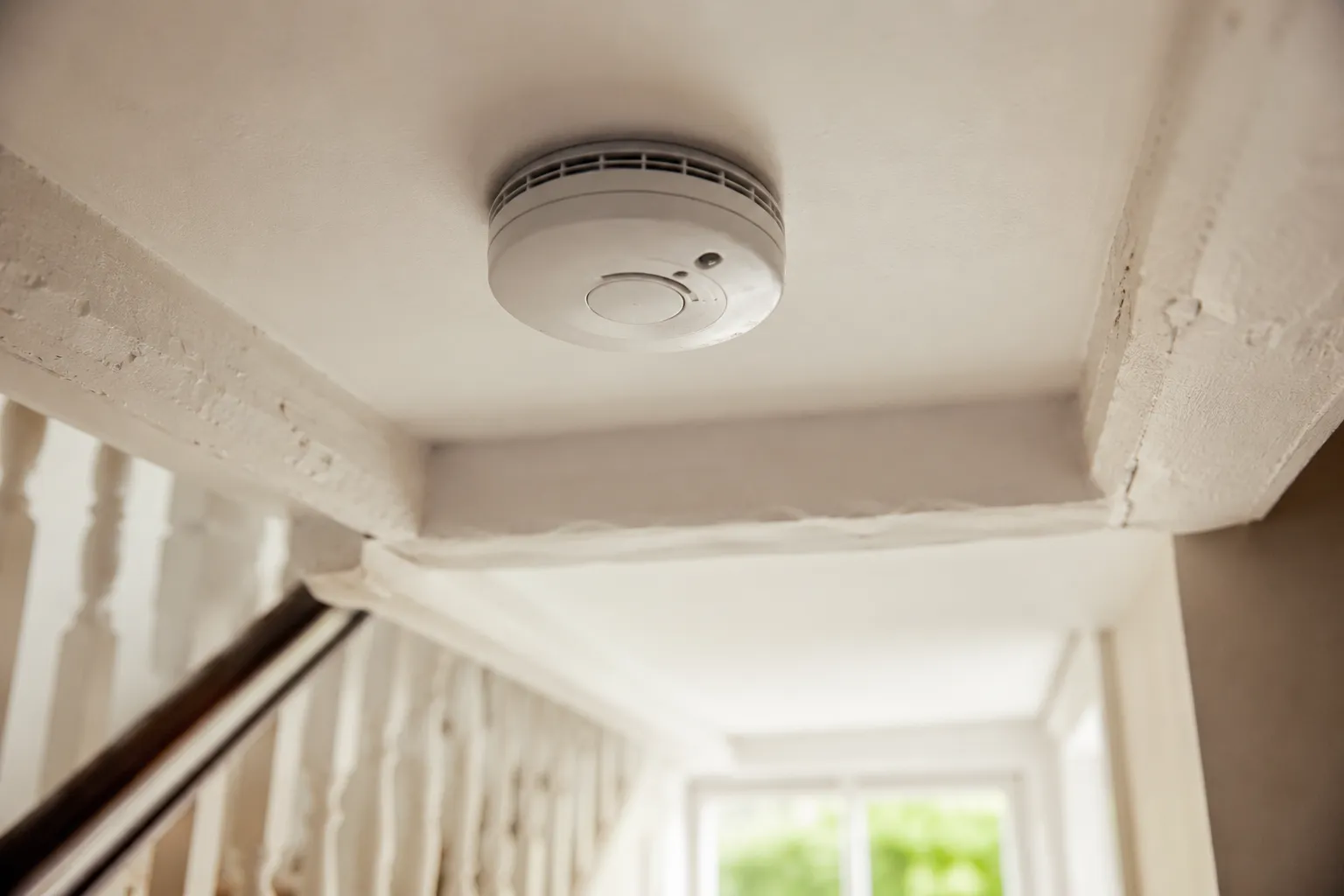
- Interlinked smoke and heat alarms, sited room by room, and a carbon monoxide alarm where there is a gas or solid fuel-burning appliance, per that same guide. The standard for paying guests is higher than the domestic one, and which alarm goes in which room is worth getting right before the decorating, not after
- An annual Gas Safe check and record if there is any gas appliance, per HSE’s guidance for landlords
- Safe electrics. England’s electrical regulations are written for tenancies rather than holiday lets, but safe electrical installations are still your duty, and an Electrical Installation Condition Report is the standard way to evidence them; in Scotland, check the conditions attached to your licence
- An Energy Performance Certificate, possibly. Holiday lets sit in an exempted grey area that depends on how the property is let, so check whether you need one rather than assuming either way
The detail behind each duty, by nation, lives in the rules guide; this step is about getting the certificates into a folder before guests arrive, because step 4 and, in Scotland, step 2 will ask for them.
Corrected 3 August 2026. The alarm bullet above previously read “smoke alarms on every storey”, which is the standard applied to a private home. The government’s guide for small paying guest accommodation expects interlinked smoke and heat alarms sited room by room, with bedrooms named specifically. The bullet now says that.
Step 4: get insurance that covers paying guests
Standard home insurance, and most landlord policies, usually exclude paying guests, which means the day your first guest checks in can be the day your existing cover quietly stops meaning anything. This is the most skipped step on this list because nothing visibly breaks when you skip it.
What to arrange before the first booking:
- Buildings and contents cover that names short-term letting or holiday-let use. Not “we told the broker on the phone”: the use should appear in the policy schedule.
- Public liability cover, because a guest tripping on a loose stair rod is a different financial event when they are a paying customer. In Scotland this is not optional: the licence conditions require valid buildings and public liability insurance explicitly.
- A conversation with your existing insurer and lender anyway, even if you are switching, so nobody can later say the use was concealed.
The full picture, including what AirCover does and does not do and the compulsory cover most owners have never heard of, is in what insurance a UK Airbnb needs.
Booking platforms advertise their own protection programmes. Read what they actually cover and what they exclude before treating one as a substitute for a policy in your own name.
Step 5: sort your tax position before the first booking
Three facts catch new UK hosts out, and all three are cheaper to know in advance:
- Letting a whole property is not the Rent a Room scheme. The £7,500 Rent a Room allowance only applies to letting furnished space in your own main home, and it halves to £3,750 where the income is shared with someone else, so most Airbnb setups cannot use it (GOV.UK, checked 2026-09-08).
- There is a £1,000 property allowance, and if your rental income sits under it you may not need to report at all; above it, you must tell HMRC, and you file a Self Assessment return once profits pass £2,500 after expenses (or £10,000 before them), registering by 5 October after the tax year you first had the income (GOV.UK, checked 2026-09-08). The property allowance has conditions, including that it cannot be combined with Rent a Room on the same income.
- The furnished holiday lettings tax regime is gone. It was abolished from 6 April 2025 for income tax and capital gains, so any guide still describing FHL benefits is out of date; short-let profits now follow standard property income rules (GOV.UK, checked 2026-09-08).
We are not accountants and this is the landscape, not advice: a short conversation with an accountant before the first booking costs less than unpicking a first year done wrong.
Step 6: furnish and equip it for guests
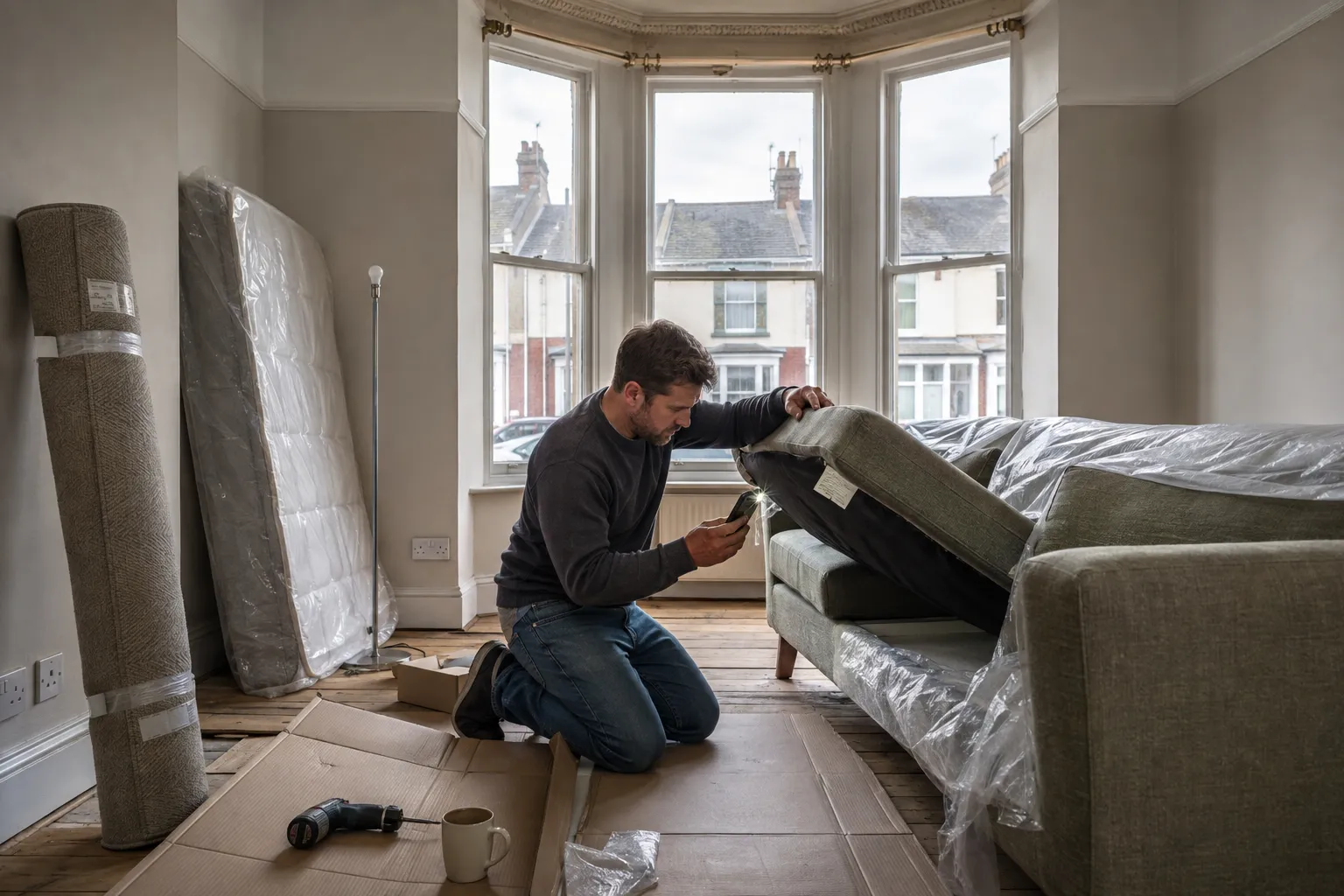
Furnish in this order: the things the law requires, the things guests will not book without, then the things that earn the review. The room-by-room version of this step, with the must-have and nice-to-have split and the label check that decides whether second-hand upholstery is safe to buy, is the full furnishing checklist. Upholstered furniture needs to meet fire safety regulations (which matters when buying second-hand), and the alarms from step 3 are non-negotiable; the rules guide covers the duties. After that, spend where guests actually feel it: the bed and mattress, reliable Wi-Fi, hot water that does not run out, and a kitchen someone could genuinely cook in. Sleeping capacity should be honest, because a sofa bed that “sleeps two” in the listing but ruins two backs in practice becomes a review, not a feature. Style matters mostly through the photographs it makes possible in step 7, which is why furnishing comes before photography in this order.
Step 7: build the listing
This is where we spend most of our own setup time, because it decides everything that follows: the listing is the property’s shopfront for years, and most owners build it in an evening.
Work in this order:
- Photographs first, and treat them as the budget line that matters. Shoot only when the property is completely ready, in daylight, landscape orientation. The first three photos decide whether anyone clicks at all, so lead with the room guests are buying, usually the living space or the view, not the front door.
- A title built from what guests search and filter for. Sleeps six, hot tub, sea view, parking, dog-friendly: concrete filterable facts earn the click; adjectives do not.
- A description that answers the questions that stop bookings: exactly where the car goes, exactly which beds are which size, what the Wi-Fi is like, how check-in works, what the third bedroom actually is. Every unanswered practical question is a message you will have to answer later, or a booking that went elsewhere.
- House rules that filter for the guest you want, written plainly. Rules are not there to sound strict; they are there so the wrong booking never arrives.
- Amenities ticked only when true. A listed amenity a guest cannot find at 9pm becomes the first line of their review.
None of this guarantees bookings, and anyone who promises that is selling something. What it does is stop a good property earning the rate its photos deserve rather than the rate its postcode deserves.
Step 8: set pricing, calendar and payout
Do not launch on one flat nightly rate: the rate each night deserves changes with season, day of week and how far away the night is, and the difference compounds across a year. The method, including how booking pace tells you when to move, is in our guide to how dynamic pricing actually works for UK short lets. At launch, keep the practical bits boring and correct: open a sensible window of calendar rather than eighteen flat-rate months, set a minimum stay you can service, and complete payout details and identity verification before the first booking, so the first payout is not the first problem.
Step 9: launch, and run the first month like an operation
The listing going live is not the finish line; it is the start of the operating rhythm. Before the first guest arrives, the changeover needs to exist as a system: who cleans, where spare linen lives, how the property gets checked between stays. Guest messages need fast answers, ideally within the hour during waking hours, because response speed is one of the first things platforms and guests both notice. Check-in instructions should work for a tired stranger arriving in the dark, with photos of the actual door and the actual key safe. And the first reviews set the listing’s trajectory, so the first guests get the property at its absolute best: they are doing you the favour of going first, and their reviews are the marketing you cannot buy. If the calendar stays quiet once you are live, work through the diagnostic for an Airbnb that is not getting bookings before changing anything at random.
What slows a launch down
The steps above are not slow in themselves; the waiting is. Consent letters from lenders and freeholders arrive on their timetable, not yours. A Scottish licence application belongs at the front of the queue because processing can run into months. Gas, electrical and EPC appointments need booking rather than wishing. Photography can only happen once furnishing is genuinely finished, which puts furniture delivery lead times on the critical path. Plan the order so the waiting overlaps: applications and consents first, certificates while furniture arrives, photography last.
And one slowdown is really a stop sign: a property whose realistic short-let numbers barely beat what it would earn as a tenancy is telling you something before you have spent anything. If you want that read on your property before committing to the setup, get a free Airbnb valuation: we do all of this for the properties we manage, and the valuation is where we would tell you whether yours is worth setting up at all.
Frequently asked questions
Do I need my mortgage lender’s permission to run an Airbnb?
If there is a mortgage on the property, assume yes until the lender says otherwise in writing, and ask for consent that covers short-term letting by name. Which consent you need, and what changes if a broker moves you to a specialist product, is set out in Can you Airbnb your house if you have a mortgage?
Can I run an Airbnb from a leasehold flat?
Sometimes, and the lease decides. Two clauses matter and most owners read only one, because the clause that usually settles it is the user covenant, and most people go looking for the letting covenant. Whether you can run an Airbnb from a leasehold flat works through both, what a breach leads to, and how to ask for consent.
How long does it take to set up an Airbnb?
It depends almost entirely on the waiting, not the work. In England, with consents in hand and furniture chosen, the remaining steps are measured in weeks. In Scotland, the licence application belongs months ahead of your intended first booking, because you need the licence before you can legally host. The slowest items everywhere are consent letters, certificate appointments and furniture lead times, which is why the order above front-loads them.
Do I need special insurance for an Airbnb?
Yes, treat it as required. Standard home insurance and most landlord policies usually exclude paying guests, so you need cover that names short-term letting or holiday-let use, with public liability included. In Scotland, valid buildings and public liability insurance is an explicit licence condition. Get the use written into the policy schedule. Our guide to Airbnb insurance covers the schedule lines to check, what AirCover actually is, and when employers’ liability applies.
What changed at the last review
Checked 8 September 2026, forty-five days on. Every figure on this page was re-read at its source and none has moved: the £1,000 property allowance, the £7,500 Rent a Room threshold, the £2,500 and £10,000 Self Assessment thresholds with the 5 October registration deadline, and the abolition of the furnished holiday lettings regime from 6 April 2025 (GOV.UK, policy paper updated 7 November 2024). One detail was added: the Rent a Room threshold halves to £3,750 where the income is shared, which the page had not said. The safety section was read again against the government’s fire guide for small paying guest accommodation and needed no further change beyond the alarm correction recorded above.
Sources
- GOV.UK: Renting out your property: paying tax and National Insurance
- GOV.UK: Rent a room in your home
- GOV.UK: Abolition of the furnished holiday lettings tax regime
- GOV.UK: Letting out a self-catering holiday home in England: rules and regulations
- GOV.UK: Making your small paying guest accommodation safe from fire
- HSE: Gas safety: landlords and letting agents
All sources checked 2026-09-08.