The Airbnb rules in Scotland start with a licence. Every short-term let needs one from the local council before it takes a booking, whether that is one night on Airbnb or a month booked direct, and the licence carries a national set of safety conditions. Planning permission, council tax or business rates and, in Edinburgh, a visitor levy are separate rules, and each one is run by a different office.
The licence decides whether you can trade at all, so start there.
Who needs a short-term let licence in Scotland
Anyone who lets residential accommodation to guests in the course of business needs one, where the guest is not making it their only or principal home. The Scottish Government’s own summary is that the scheme covers holiday cottages, B&Bs, guest houses, rooms within a home and unconventional accommodation such as pods and yurts, and that a licence is required “regardless of how long you let the accommodation for. It could be one night or several months.”
Payment does not have to be money. The licensing order counts a benefit in kind, such as the reciprocal use of accommodation, so a home swap arranged in the course of business is a short-term let.
The exclusions are narrow. You do not need a licence where:
- the guest is a member of your immediate family, or an owner or part-owner of the property
- the guest has a tenancy, such as a private residential tenancy, which is a different legal arrangement with its own requirements
- the accommodation is provided so the guest can work for you or your household
- the accommodation is a hotel with planning permission as a hotel, an aparthotel of at least five serviced apartments under one owner, a hostel, or somewhere already licensed for overnight stays, such as a caravan on a licensed holiday site
Each property needs its own licence, and the licence names the type of let you may offer.
Which of the four licence types you need
The type depends on whether the property is your home and whether you are there during the stay. Scotland has four:
- Secondary letting. A property where you do not normally live, such as a second home or a holiday flat.
- Home sharing. All or part of your own home, let while you are living there.
- Home letting. All or part of your own home, let while you are away.
- Home letting and home sharing. Both, at different times.
You may only offer the type the licence was granted for. That is a mandatory condition, and so is keeping every advert consistent with the licence.
Licences and exemptions in operation in Scotland, 31 December 2025
Most licences are for a property the host does not live in
One circle for each licence type. The area of each circle is drawn to scale with the number of licences.
- Secondary lettingA property that is not your home25,13178%
- Home sharingYour home, while you are there3,35410%
- Home lettingYour home, while you are away2,1067%
- Home letting and home sharingBoth, at different times1,7265%
For an owner with a holiday home or an investment flat, the licence is almost always secondary letting. It is also the type that planning rules are aimed at, which matters in the two control areas covered below.
What the licence requires of the property
Schedule 3 to the licensing order sets the mandatory conditions, and every licence in Scotland carries them. Your council can add its own on top. The national list asks for:
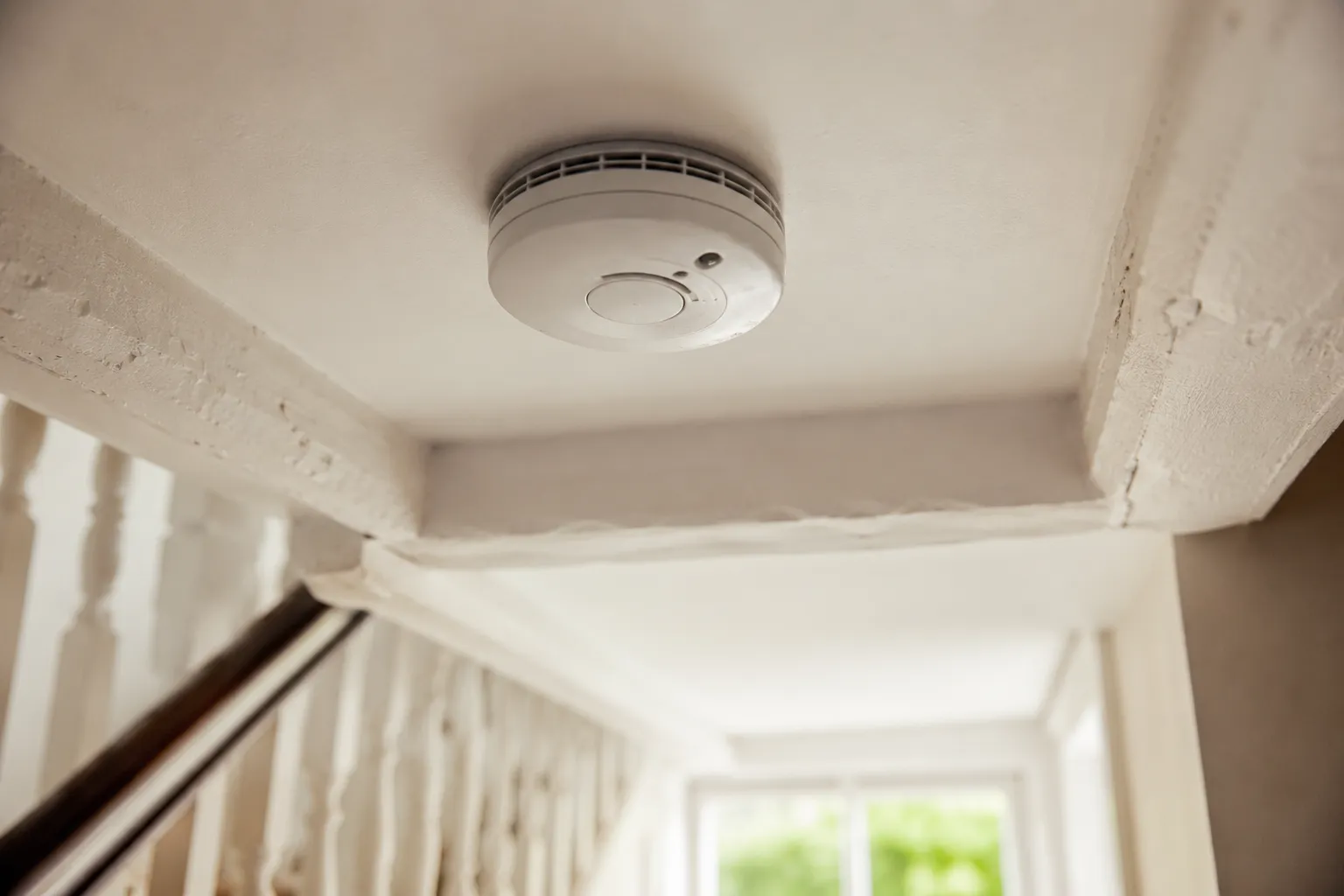
- Fire safety. Equipment that detects and warns of fire and of carbon monoxide, and records showing the upholstered furniture and mattresses meet the furniture fire safety regulations. A fire risk assessment must be carried out as well.
- Gas. An annual gas safety inspection wherever there is a gas supply, and no lets until any failed appliance is fixed. Our gas safety guide covers the record itself.
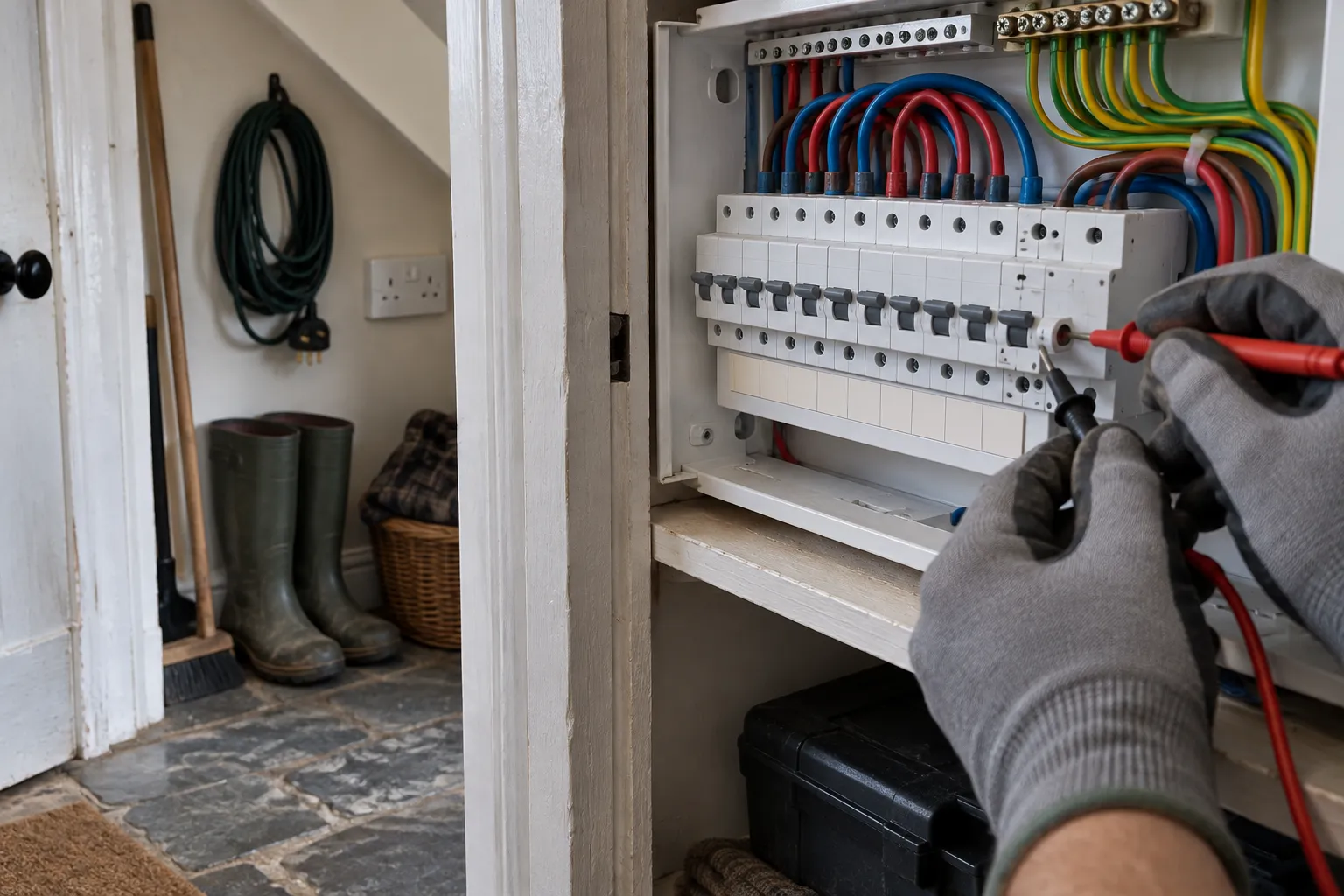
- Electrics. An inspection at least every five years with an Electrical Installation Condition Report, plus a Portable Appliance Testing report on movable appliances. The electrical safety guide sets out all three parts.
- Water. An assessment of the risk from legionella in every property, and the private water supply regulations where the property is on one.
- Repair. Reasonable steps to make sure the premises are safe for residential use.
- Occupancy. Never more guests than the number written on the licence.
- Insurance. Buildings insurance for the whole licence period and public liability insurance for every stay. What insurance a UK Airbnb needs explains why home cover will not do.
- Listings. The licence number on every advert, on every site, along with the Energy Performance Certificate rating where the property needs one. Scotland has no four-month exemption, as our EPC guide explains.
- Information for guests. A certified copy of the licence and its conditions kept in the property, with the gas, electrical and appliance reports, fire and emergency information, and instructions for what to do if the carbon monoxide alarm sounds.
The last item on that list was extended on 30 August 2024, when an amendment order added the carbon monoxide instructions and safety instructions for any mobile gas heater.
How long a licence takes, and what it costs
A council has nine months from the date of your application to decide it. If it needs longer it has to ask the sheriff court for an extension, and if it misses the deadline without one, the licence is treated as granted for one year while the council finishes its work.
Nine months is the legal limit, and it is the figure to plan around. A new host cannot take bookings or receive guests while waiting. You can advertise the property in that time, as the government’s guidance for hosts confirms, but the calendar stays closed.
The steps inside those nine months are fixed nationally:
- Apply to the council where the property is, naming the licence type, every owner and anyone who will manage the let day to day. Owners who are not applicants must give written consent.
- Display a site notice at or near the property for 21 days from the date you applied, then send the council a certificate confirming you did.
- Wait out the objection period. Neighbours and anyone else have 28 days from the public notice to object, and you get the chance to respond.
- Pass the checks. The council decides whether everyone named on the form is a fit and proper person, and whether you can meet the conditions.
Most applications get through. Scotland’s official statistics count every application councils validated between the scheme opening on 1 October 2022 and the end of 2025.
Every validated licence application in Scotland, 1 October 2022 to 31 December 2025
Nine in ten were granted
The band on the left is all 40,434 validated applications. It splits into what happened to them, each stream drawn to scale.
- Granted36,58490%
- Waiting for a decision1,4814%
- Withdrawn by the applicant1,3973%
- Refused, revoked, suspended or not considered9722%
Granted includes licences that have since lapsed or been replaced. The count includes renewals. Percentages are rounded, so they add to 99.
Half of those applications, 20,251 of them, went to three councils: Highland, Edinburgh and Argyll and Bute. Every council publishes its licensing policy, and that document tells you what your council expects on top of the national rules.
Fees are set by each council. The order lets a council charge reasonable fees that recover its costs, and it may vary them by the size of the property, the number of bedrooms, the number of guests, the type of let and how long the property is available. Read the fee on your own council’s page before you budget, because no national figure exists.
A first licence lasts up to three years. At renewal a council can grant a longer one, and it has to publish the circumstances in which it will.
Airbnb rules in Scotland your council decides, and the one it cannot
Holyrood fixed the conditions and the clock. Almost everything else is local, which is why two owners in different parts of Scotland can describe two different schemes and both be right.
| Set nationally | Decided by your council | |
|---|---|---|
| Licence conditions | The mandatory conditions in Schedule 3 | Any additional conditions for its area |
| Fees | Must be reasonable and tied to the council’s costs | The amounts, and whether there are annual fees |
| Decision time | Nine months, or a deemed one-year licence | How quickly it works inside that limit |
| Licence length | Up to three years for a first licence | Whether renewals run longer |
| Temporary exemptions | No more than three periods and six weeks in total in a calendar year | Whether it offers them at all |
| Temporary licences | Up to six weeks, or until a full application is decided | Whether it issues them |
| Planning | Control areas are allowed by law | Whether to designate one |
| Council tax | A default second home premium of 100% | A higher or lower premium, or none |
| Visitor levy | The Act that permits one | Whether to have one, and the rate |
One limit runs the other way. The licensing order says a council’s licence conditions must not impose any limit on the number of nights a property may be used for secondary letting. A Scottish licence therefore cannot contain anything like London’s 90-night annual limit.
Temporary exemptions are worth a look if you only let around one event. Where a council offers them, you can apply for up to three in a calendar year, covering six weeks in total, and the council may ask less of you than it would for a full licence.
Planning permission and the two control areas
Planning is a separate permission from a separate team, and the licence does not replace it. Two control areas are in force: the whole City of Edinburgh Council area, since 5 September 2022, and Badenoch and Strathspey in the Highland Council area, since 4 March 2024. Inside one, starting a new secondary let will very likely need planning permission. Elsewhere the ordinary test applies, and our planning permission guide explains how councils judge it.
The two regimes are wired together in three places:
- A licensing authority can refuse even to consider an application within 21 days where it thinks the let would breach planning control.
- If that happens and you later get permission or a certificate of lawfulness, a fresh licence application made within 28 days is free.
- In a control area, a mandatory condition requires that planning permission is in force or has been applied for wherever the let needs it.
In either control area, settle the planning question before you pay a licence fee.
Council tax, business rates and the second home premium
A Scottish holiday let pays non-domestic rates if it is available to let for 140 nights or more and actually let for 70 nights or more in the financial year, which runs from 1 April to 31 March. It must also be let commercially and be nobody’s main home.
You have to prove it. The evidence goes to the assessor, usually by 26 May after the year ends, and if it does not arrive or falls short the property goes on the council tax list for that year.
That matters more than it used to. A furnished property that is nobody’s main home and is lived in for at least 25 days a year counts as a second home for council tax. Since 1 April 2026 the national default is a 100% premium on second homes, which doubles the bill, and each council may set a higher or lower percentage or none at all. Guides written before that date describe the premium as capped at double. The cap has gone, so the only figure that counts is the one on your council’s page.
The practical point for a property that sits near the 70-night line: the nights you let decide which bill you get, so a weak year costs you the bookings and can change the tax bill as well. Winter bookings are usually where the missing nights are found.
The visitor levy
A Scottish council can charge a levy on paid overnight stays, and self-catering accommodation is on the list of what it covers. Edinburgh went first. Its levy is 5% of the accommodation cost for the first five consecutive nights, on stays from 24 July 2026 that were booked on or after 1 October 2025.
The guest pays it and the law makes the accommodation provider liable for it, so you collect it and account for it to the council. Edinburgh reimburses 2% of what you collect towards the cost of doing so. Any other council can introduce a scheme of its own under the same Act, which Holyrood amended in 2026, so check your council’s page for whether a levy applies and how it is worked out.
If someone else manages the property
The licence controls who may run the let. Only people named as holders of the licence can carry out its day to day management, and the government’s guidance says that includes any agent named in the application. If a management company runs the property, the application names the company’s directors or partners, and they go through the same fit and proper person test as you.
Two consequences follow, and both are easy to miss when you are comparing managers:
- Appoint the manager before you apply where you can. After a licence is granted, changing who manages the property needs the council’s approval first.
- Every advert carries the licence number. A manager who puts your home on several booking sites needs the number in every listing from the first day.
A management company can take the pricing, the marketing, the guests and the changeovers off your hands in Scotland as it can anywhere else, once its name is on the licence. Ask any manager you speak to how they handle that, and read what a management agreement should say about who holds the paperwork.
Buying a property in Scotland to let
Two rules apply before you own it. The first is tax: buying an additional residential property in Scotland normally adds the Additional Dwelling Supplement to the Land and Buildings Transaction Tax, and for transactions on or after 5 December 2024 the supplement is 8% of the purchase price. A conveyancing solicitor will confirm what applies to your purchase.
The second is the licence, which no longer dies with a sale. Since 30 August 2024 a licence holder can apply to transfer the licence to a buyer. The council consults the police, and the time left on the licence carries over, so a licence transferred 13 months into a three-year term has 23 months to run. A property sold with forward bookings can keep them. If you are building, a provisional licence can be granted before the property exists and confirmed when it is finished, within three years.
When you view a property that is already let, ask for the licence number and look it up. Every council publishes a free public register, and it shows the type of let and the maximum number of guests.
What happens if you let without a licence
Operating a short-term let without a licence is a criminal offence with a fine of up to £2,500, and you can be banned from applying for a licence for a year. Breaking a licence condition is a separate offence, and a council can also serve an enforcement notice, vary the licence, suspend it or revoke it.
Refusal has a cost of its own. You can appeal to the sheriff court within 28 days, but you cannot reapply for a year unless your circumstances materially change. Councils are also allowed to tell booking platforms about refusals, revocations and people operating without a licence.
When a Scottish holiday let does not add up
It does not add up if the figures only work with guests arriving next month. A new host waits for the licence, the wait can lawfully run to nine months, and in a control area the planning decision comes before it.
It is also a harder case for a property that will not reach 70 let nights. That property stays on council tax, where the second home premium now has no ceiling.
Where the property can clear both, Scotland is a settled place to let. The rules have been in force since 2022, nine in ten validated applications have been granted, and a licence cannot cap your nights. The remaining question is what the property would earn against those costs, and a free valuation answers that for your address before you spend anything on an application. If you would rather hand over the running of it, this is how our management works.
Frequently asked questions
Do I need a licence to rent out a room in my own home in Scotland?
Yes. Letting a room while you live there is home sharing, and it needs a home sharing licence. Letting the whole home while you are away is home letting. If you do both, there is a combined licence that covers them.
Can I advertise a Scottish holiday let before the licence is granted?
Yes, if you are a new host, but you cannot take a booking or receive a guest until the licence is issued. The government’s guidance for hosts says so directly. Once you have a licence, the number goes on every advert.
Is there a limit on how many nights I can let in Scotland?
The licence cannot set one for secondary letting, because the licensing order stops councils imposing a night limit through licence conditions. Planning permission is a separate matter and can come with conditions of its own. For rates, the numbers that matter are 140 nights available and 70 nights let.
Does a Scottish short-term let licence transfer when the property is sold?
It can. The current holder applies to the council to transfer it to the buyer, the council consults the police, and the remaining term carries over. There is no automatic transfer, so agree who applies and when as part of the sale.
Sources
- legislation.gov.uk: Civic Government (Scotland) Act 1982 (Licensing of Short-term Lets) Order 2022, articles 2 to 4 (definition of a short-term let, commercial consideration, one licence per premises; read 2026-11-05)
- legislation.gov.uk: the same Order, Schedule 1 (excluded accommodation and excluded tenancies; read 2026-11-05)
- legislation.gov.uk: the same Order, Schedule 2 (no night limit on secondary letting, temporary exemptions, preliminary refusal on planning grounds, provisional licences, licence length, transfers, public register, information sharing, fees; as amended 30 August 2024 by SSI 2024/227; read 2026-11-05)
- legislation.gov.uk: the same Order, Schedule 3 (the mandatory licence conditions; read 2026-11-05)
- legislation.gov.uk: Civic Government (Scotland) Act 1982, section 3 (three months to consider and six more to decide; deemed grant for one year; read 2026-11-05)
- legislation.gov.uk: Civic Government (Scotland) Act 1982, section 7 (offences; read 2026-11-05)
- Scottish Government: Short-term lets: regulation information (scope, control area dates, enforcement; last updated 15 May 2026; read 2026-11-05)
- Scottish Government: Short-term lets licensing scheme part 1: guidance for hosts and operators (advertising before a licence, site notice, objections, day to day management and agents, transfers; errata 14 May 2026; read 2026-11-05)
- mygov.scot: Getting a short-term let licence and its pages on licence types, applying, legal requirements, exclusions and planning control areas (the £2,500 fine and one-year ban, nine months, 28-day appeal, the two control areas; read 2026-11-05)
- Scottish Government: Short-Term Lets Licensing Statistics, Scotland, to 31 December 2025 (official statistics, provisional; published 28 April 2026; read 2026-11-05)
- mygov.scot: Non-domestic rates: short-term lets (140 and 70 nights, the financial year, the 26 May evidence date; read 2026-11-05)
- legislation.gov.uk: Council Tax (Variation for Unoccupied Dwellings) (Scotland) Amendment Regulations 2026 (second home definition, 100% default premium, regulation 4A; in force 1 April 2026; read 2026-11-05)
- mygov.scot: Council Tax for empty homes and second homes (the former limit of double no longer applies; read 2026-11-05)
- legislation.gov.uk: Visitor Levy (Scotland) Act 2024, Part 2 (overnight accommodation includes self catering; the liable person; as amended by the Visitor Levy (Amendment) (Scotland) Act 2026; read 2026-11-05)
- City of Edinburgh Council: Edinburgh Visitor Levy comes into effect (5%, five nights, 24 July 2026, bookings from 1 October 2025; published 23 July 2026) and Visitor Levy: information for businesses (2% reimbursed; read 2026-11-05)
- Revenue Scotland: The Additional Dwelling Supplement (8% for transactions on or after 5 December 2024; read 2026-11-05)